How to tell if firewood is properly seasoned
Burning wet wood is the most common reason a stove smokes, the glass blackens and the room never quite warms up. Freshly cut wood can be half water by weight, and all of that has to boil off before the log gives you any real heat. Here is how to tell whether the logs you have bought are actually ready to burn.
1. Look at the ends
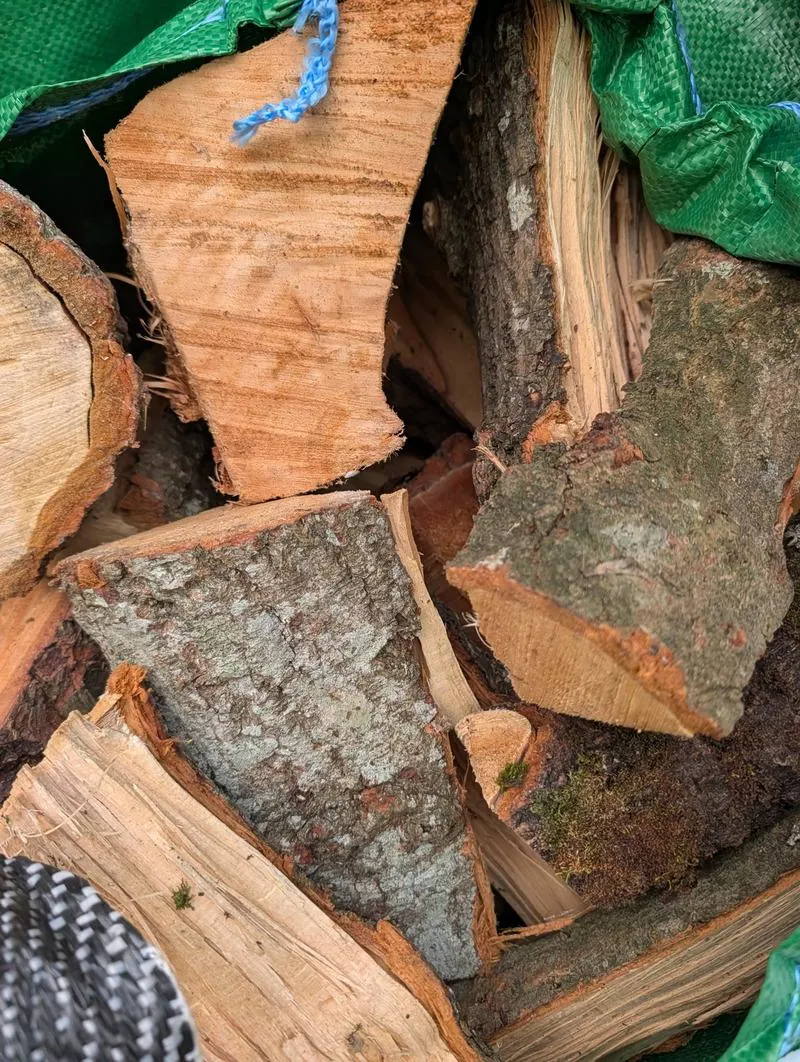
Seasoned logs usually have cracks (called checks) running out from the centre across the cut ends. The wood tends to look paler or greyer than fresh wood, which often looks bright and slightly damp.
2. Feel the weight
Pick up two logs of a similar size. Dry wood is noticeably lighter, because the water has gone. If a log feels surprisingly heavy for its size, it probably still holds a lot of moisture.
3. Knock them together
Bang two logs against each other. Dry wood gives a sharp, hollow “clack”. Wet wood makes a dull thud.
4. Check the bark
On well seasoned logs the bark is often loose and comes away easily. That is not true of every species — birch bark tends to stay put — so use it alongside the other checks.
5. Use a moisture meter (the one that counts)
The checks above are useful, but the only reliable answer is a reading. A cheap moisture meter pushed into a freshly split face of a log (not the outside, which dries first) tells you the real moisture content. You are aiming for under 20%.
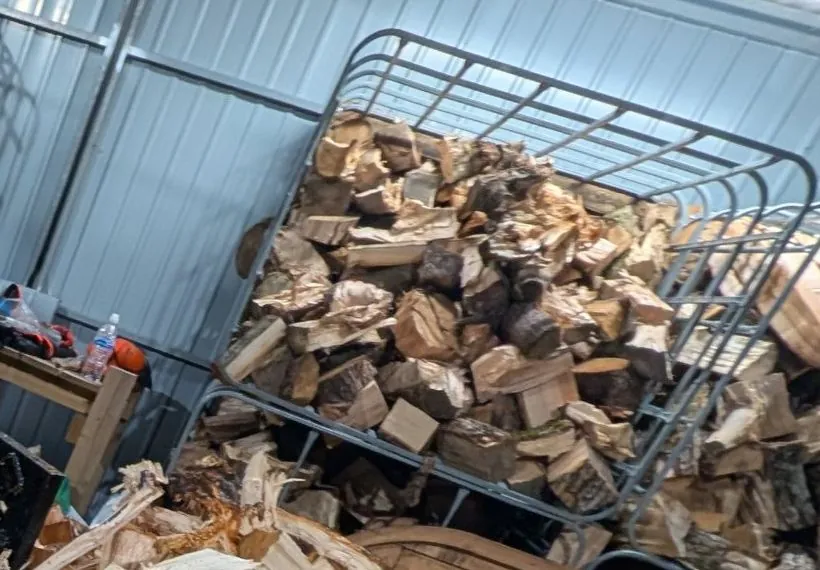
That is exactly what we do. Every batch of our hardwood is moisture tested before it goes in a bag, and nothing leaves our Wenvoe store unless it is under 20%. See how we dry our logs.
What if my logs are too wet?
- Stack them off the ground, under a roof, with the sides open to the wind.
- Split larger logs — smaller pieces dry much faster.
- Bring a day or two’s worth indoors before burning to take the chill and surface damp off.
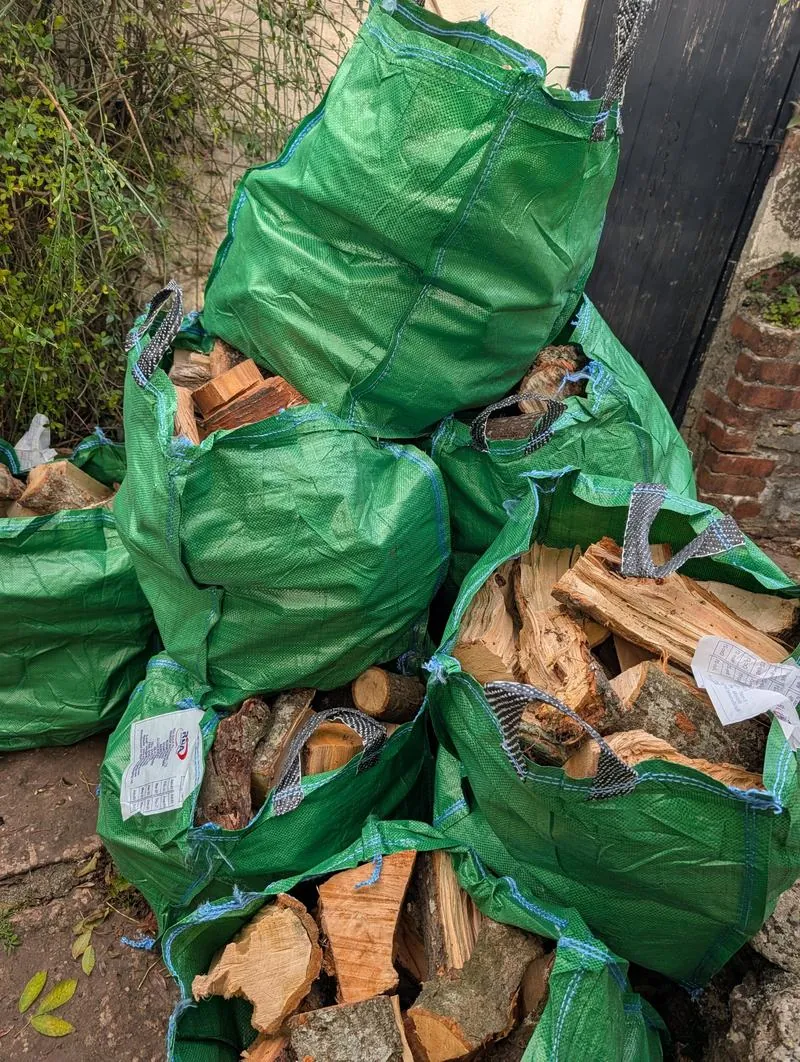
Or skip the wait: our bags of dry hardwood start at £20 a bag, with free delivery within 3 miles of Wenvoe.